Author: RBox | Category: Human Resources Strategies and Solutions
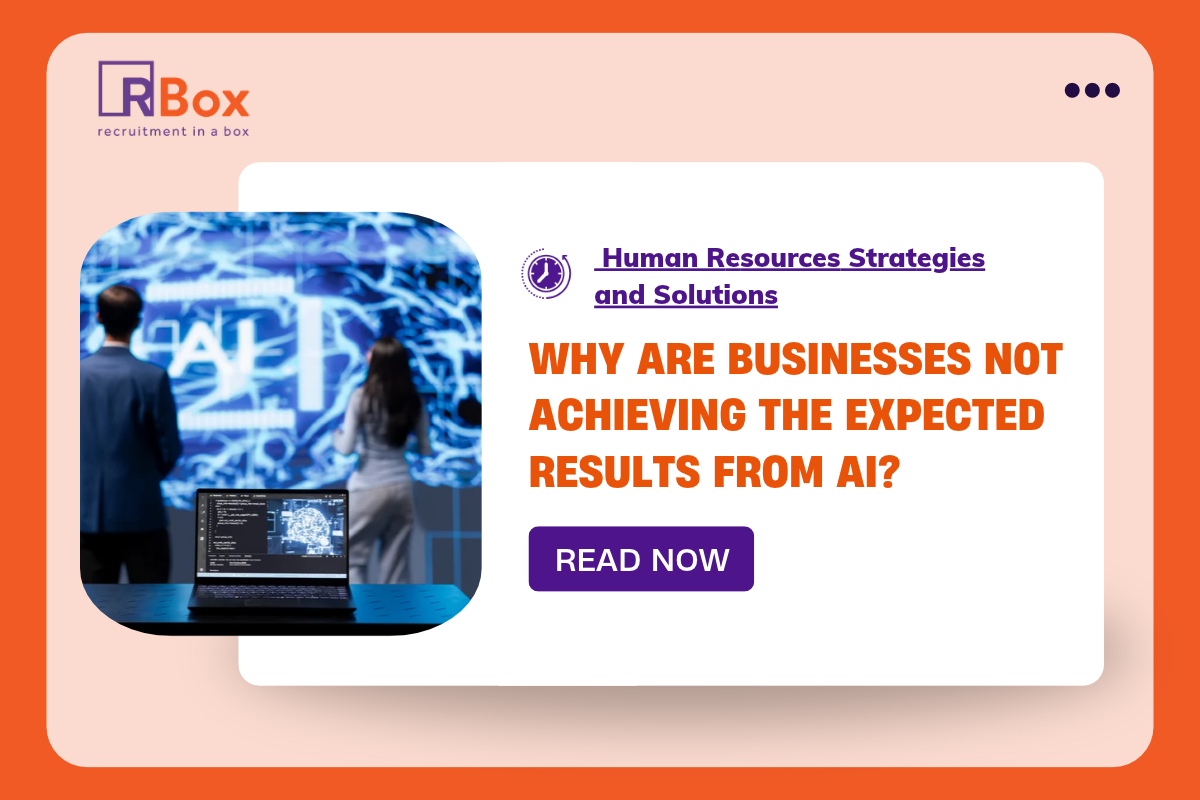
AI is becoming increasingly widespread, yet its real-world impact often falls short of expectations. This highlights an important point: technology alone is not enough. Businesses also need capable leaders who can turn strategy into tangible results. So, what connects technology, people, and sustainable business growth?
AI Adoption Is Widespread, but Its Real Impact Remains Uncertain
Artificial intelligence (AI) is rapidly becoming an integral part of business operations. From process automation and data analysis to decision-making support, the technology offers significant opportunities to improve productivity and optimize resources.
However, widespread AI adoption does not necessarily translate into meaningful business results.
According to an article published by Dan Tri on November 19, 2026, based on Anphabe’s report The Next Productivity Leap, approximately 90% of surveyed businesses have incorporated AI into at least one workflow. Yet only 4% reported that the actual value generated by AI met or exceeded their initial expectations.
Other findings further highlight the gap between adoption and performance:
-
52% of businesses reported improvements in overall productivity.
-
29% were able to measure clear returns on investment.
-
82% of AI users still primarily use the technology for individual tasks.
-
43% of employees reported spending additional time reviewing and correcting AI-generated outputs.
These figures reveal a notable reality: businesses may have invested in technology without necessarily converting that investment into proportional business value.
The challenge is not simply whether a business uses AI, but how the technology is implemented, managed, and integrated into actual operations.
Why Is Technology Investment Not Enough to Drive Productivity?
AI can process data faster, support a wide range of tasks, and reduce the time required to complete certain activities. However, realizing these benefits at an organizational level requires more than adopting a new tool.
1. Technology Has Not Been Fully Integrated into Business Processes
Using AI for individual tasks may save time at certain stages, but it does not necessarily improve the efficiency of the entire workflow.
If work allocation, data systems, and collaboration methods remain unchanged, AI may not reach its full potential.
Businesses need to view AI as part of a broader operational redesign rather than merely a tool for individual productivity.
2. A Lack of Effective Governance and Performance Measurement
The number of activated accounts, employees using AI, or frequency of access only indicates the level of technology adoption.
To evaluate its actual impact, businesses need to establish performance indicators linked to business outcomes, such as:
-
How much time has been saved in completing tasks?
-
Has the quality of output improved?
-
Have operating costs been optimized?
-
How does AI contribute to productivity and efficiency across different departments?
Without clear objectives and measurement mechanisms, businesses risk investing in technology without being able to determine the value it delivers.
3. Human Capabilities Have Not Kept Pace with Transformation
AI cannot operate effectively without people who understand business objectives, internal processes, and how to apply technology appropriately.
Employees need to develop the skills required to use AI effectively. At the same time, managers must be able to identify where the technology should be applied, how risks should be managed, and how AI-generated results can support the organization's objectives.
This is also why digital transformation is not solely a technology department's responsibility. It requires coordination among leadership, HR, and relevant business functions.
As AI Advances, Leadership Becomes Increasingly Important
New technologies can change the way businesses operate, but leadership teams are responsible for guiding how organizations adapt to these changes.
During transformation, businesses need leaders who can combine strategic thinking, operational management, and an understanding of technology.
An effective leader does not necessarily need to be an AI expert, but should know how to ask the right questions:
-
What business problem is the technology intended to solve?
-
Which processes need to be redesigned?
-
What capabilities does the current workforce need to develop?
-
How can technology and people work together effectively?
-
What long-term value will these changes create?
At the senior management level, decisions regarding talent, strategy, and operations can directly influence an organization's ability to adapt.
As technology continues to evolve, leadership is no longer just about maintaining operational stability. It is also about guiding the organization toward new ways of working.
Senior Talent: The Link Between Strategy and Execution
A transformation strategy may look promising on paper, but successful implementation requires people with the capabilities to turn direction into action.
These may include CEOs shaping business strategy, COOs optimizing operations, CTOs leading technology transformation, or functional directors responsible for restructuring processes and developing teams.
These roles extend beyond day-to-day management. They serve as a critical link between business objectives, organizational resources, and execution capabilities.
Therefore, recruiting senior talent during a transformation should not be limited to finding candidates with relevant experience or a suitable skill set on paper.
Businesses need to assess candidates more comprehensively:
-
Strategic Thinking: The ability to evaluate challenges from a long-term perspective and identify the right direction.
-
Change Management: The ability to guide teams through new processes, technologies, and operating models.
-
Execution Capability: The ability to translate objectives into concrete plans, actions, and measurable outcomes.
-
Organizational Fit: The ability to work effectively with existing teams, company culture, and business priorities.
The right hiring decision cannot guarantee the success of every transformation initiative. However, selecting the right people for critical positions can provide an important foundation for more effective strategy execution.
Headhunting: A Strategic Talent Solution for Business Transformation
As leadership requirements become increasingly complex, traditional recruitment methods may struggle to reach the most suitable candidates.
Many senior professionals are performing well in their current roles and are not actively seeking new opportunities. Reaching, assessing, and engaging this talent requires market knowledge, professional networks, and a strategic recruitment process.
This is where Headhunting – Executive Search and Senior Talent Advisory can support businesses.
As a recruitment consulting partner, RBOX works with businesses to:
1. Define the Candidate Profile
Identify leadership profiles that align with job requirements, business objectives, organizational structure, and company culture.
2. Develop a Talent Attraction Strategy
Proactively identify and connect with qualified candidates, including senior professionals who are not actively looking for opportunities in the market.
3. Conduct In-Depth Candidate Assessment
Evaluate candidates' experience, leadership capabilities, strategic thinking, and suitability for the organization's actual requirements.
4. Support Candidate Introduction and Interview Coordination
Work with businesses to introduce candidates, coordinate interviews, and gather feedback, ensuring a structured and well-directed recruitment process.
5. Support the Hiring and Post-Placement Process
Assist with subsequent recruitment steps to help establish a suitable connection between the candidate and the organization.
Headhunting does not replace a transformation strategy or directly resolve every challenge associated with AI adoption. Its value lies in helping businesses access the right talent for positions that have a significant influence on strategic direction and operational performance.
Technology Creates Opportunities, but People Determine How Businesses Realize Them
The gap between AI adoption and actual results serves as a reminder that digital transformation cannot be measured solely by the number of tools implemented.
To create sustainable value, businesses need to consider technology, processes, workforce capabilities, and leadership quality together.
AI can help people work faster. However, identifying the right challenges, making strategic decisions, and guiding organizations through change still require capable and well-aligned teams.
In this journey, investing in senior talent is not merely a recruitment activity. It is also part of a long-term strategy to strengthen business competitiveness.
RBOX – Executive Search and Senior Talent Advisory
RBOX partners with businesses to identify, engage, and select leadership talent aligned with their growth objectives.
In an ever-changing market, competitive advantage depends not only on the technology a business possesses, but also on having the right people to turn technology and strategy into practical results.
RBox - A Leading Prestigious HR Service Provider in Vietnam & Asia-Pacific
Contact RBox today for tailored HR Solution Consulting
Hotline: 0938 051 663 | Email: sales@rbox.com.vn | Zalo OA: RBox National Jobs | LinkedIn: RBox - Recruitment in a Box